
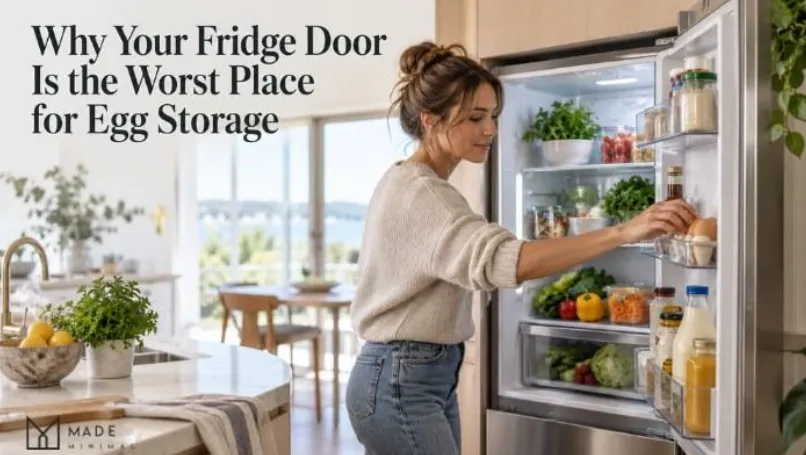
The fridge door is the worst place to store eggs, yet many Australian households still keep them there. It feels logical, doesn’t it? But opening the door repeatedly exposes them to temperature changes, which can reduce their quality over time.
So avoiding those temperature changes starts with where you place your eggs. Fortunately, home-focused brands like Made Minimal offer storage products that keep foods in suitable areas of the fridge. For eggs, that suitable area means choosing a more temperature-stable shelf.
In this article, you’ll learn:
- Why the door damages egg quality
- Which fridge zone keeps them fresh for up to 5 weeks
- What storage tools actually reduce food waste
First, let’s look at what temperature swings do to an egg.
Temperature Swings and What They Do to Egg Freshness
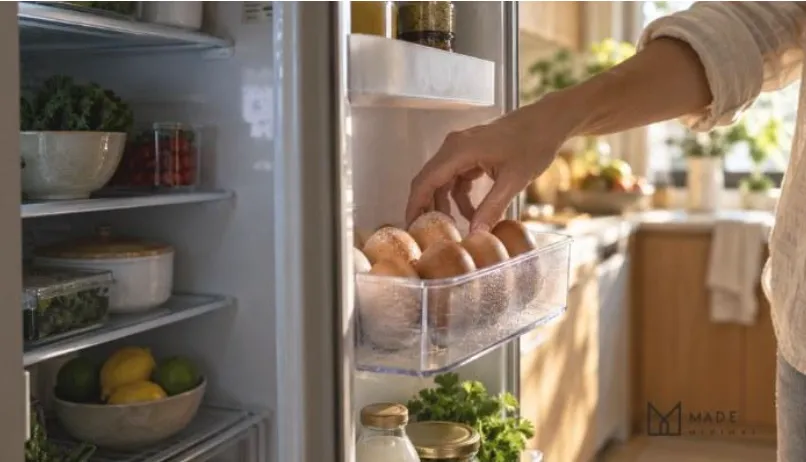
Every time you open the fridge, warm air from the surrounding environment rushes in, and the door shelf absorbs it first. That spike might only last a minute, but it happens dozens of times a week. As a result, the damage happens internally.
Here’s how: eggs have a natural protective layer called the cuticle, which seals thousands of tiny pores in the shell to block spoilage bacteria. Over time, repeated warming and cooling weaken this layer.
Once the egg’s natural protective barriers break down, bacteria can enter more easily and increase the risk of foodborne illness. This is also where enzymatic autolysis begins, a process where the egg’s own proteins start breaking down from the inside.
The Coldest Spot in Your Fridge for Fresh Produce Storage
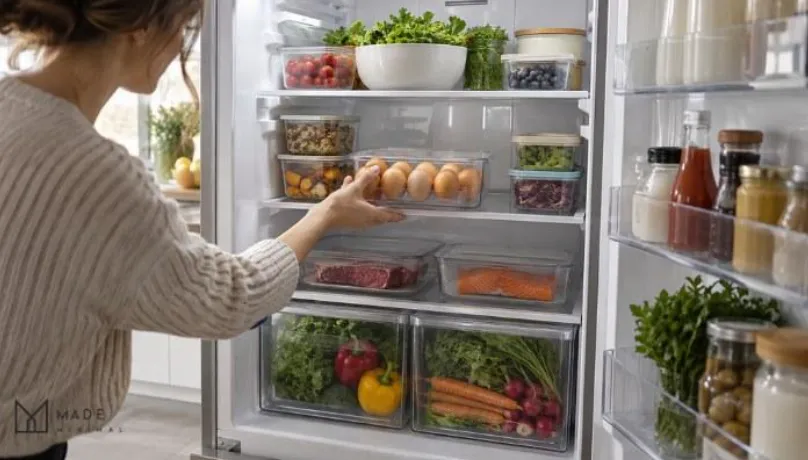
Moving eggs to the right fridge zone immediately extends how long they stay usable. But placing them correctly means understanding how cold air moves through the fridge.
The following breakdown covers which zone each one fits and why eggs belong in one specifically.
Why the Middle Shelf Wins
The middle shelf maintains the most consistent temperature in the fridge, sitting comfortably between 1°C and 4°C in a well-functioning unit. From our experience testing different shelf positions, eggs stored here last noticeably longer than those kept anywhere near the door.
Meanwhile, the bottom shelf runs colder, sometimes dipping close to freezing point. That’s why this part is fine for raw meat, fish, and seafood but too harsh for eggs. Freezing can damage the yolk membrane and ruin texture beyond repair.
Bottom Line: The middle avoids both extremes. No warm air pockets from the door or freezing risk from the base.
Fridge Organisation Tips That Actually Protect Food Products
Organising your fridge by temperature sensitivity reduces spoilage across the board. So don’t forget to match each food to the zone that suits its spoilage rate.
Follow these simple placement tips for your fridge:
| Zone | What Goes There | Why It Counts |
| Bottom Shelf | Raw meat and meat products | Prevents cross-contamination with other food products |
| Crisper Drawers | Fresh fruit, most fruits like apples, vegetables | Humidity stays controlled, extending produce freshness |
| Sealed Containers | Leftover fish, pungent cheeses, strong-smelling items | Eggshells are porous and absorb nearby odours easily |
| Vertical Space | Pasta, condiments, other items | Frees up shelf room and keeps the fridge organised |
Once you organise your fridge this way, you can see what you have without moving items around.
Reading Freshness Indicators Before It’s Too Late
Most people throw out perfectly good eggs, or cook bad ones, simply because they never learned the basic checks. To do the egg test, you don’t need any special equipment. A bowl of cold water and 30 seconds is enough.
Three freshness indicators home cooks rely on for a quick, reliable safety check:
- Float Test: First, fill a bowl with cold water and lower the egg in gently. Then check the following things. If the egg sinks and lies flat because the air cell inside is still small, it’s fresh. An egg standing upright on the bottom is ageing but still safe to eat. And one floating at the surface means the air cell has expanded too far and the contents have deteriorated. So discard it.
- Egg White Condition: Crack the egg onto a flat surface and check the white. A fresh egg has a firm, thick white sitting close around the yolk. Meanwhile, a clear, watery white spreading widely across the surface signals the egg is well past its best.
- Best-Before Date: The date on the carton reflects quality under ideal storage conditions. However, storage conditions can change how long that quality lasts. For example, eggs deteriorate more quickly when you store them near the door or at temperatures above 4°C.
In practice, the float test and the visual white check together give you a reliable picture of freshness. If something smells off after cracking, don’t second-guess it.
Egg Storage Tools Worth Having for Home Cooks
Many people drop eggs straight onto a fridge shelf or leave them in the original carton. Both approaches work, but neither is optimal for maintaining freshness over the full 3-5 weeks eggs are safe to eat.
Instead, a well-designed egg container keeps moisture out, holds eggs pointed-end down, and adds weeks to their shelf life.
Specifically, two tools close the gap between where eggs sit and how long they last:
Lazy Susans and Dedicated Egg Trays
You’ve probably forgotten eggs at the back of the fridge at least once and found them somewhere between “probably fine” and “definitely not”. A lazy susan solves this without any extra effort. It rotates on the middle shelf so the oldest eggs always come forward naturally.
Another useful option is a dedicated egg tray. It holds each egg pointed-end down, which keeps the yolk centred and slows air cell expansion.
For a more organised way to use this storage method, a rolling dispenser can also keep eggs in order inside the fridge. Made Minimal stocks a “Rolling Egg Storage Box” that uses a gravity-fed system to move older eggs to the front automatically.
This kind of rotation reduces food waste without any extra thought for home cooks who are going through eggs across multiple recipes each week.
The Drainage Plug Problem with Cheaper Containers
Most people don’t check for a drainage plug when buying egg containers. Without one, condensation can collect inside the container and leave the eggs sitting in moisture. Damp conditions can then encourage bacteria to grow around the eggs.
From what we’ve heard from our customers, the difference between a container with and without a drainage plug shows up within the first two weeks. That’s why you should look for a raised drainage plug and BPA-free materials, both of which signal good quality construction.
Glass containers are another solid option. But they take up more shelf space and don’t offer the rotation function a dedicated tray does.
Your Eggs Deserve Better Than the Door
Moving eggs off the door and onto the middle shelf costs nothing but pays off every week. Once you keep them pointed-end down in a container with proper drainage, they’ll stay fresh for the full 3-5 weeks after purchase.
No kitchen overhaul needed. Just better placement, a decent container, and a quick weekly rotation to reduce food waste.
When you’re ready to sort your egg storage, Made Minimal has kitchen organisers built for exactly this. We supply the “Rolling Egg Storage Box” to keep eggs visible, fresh, and rotating automatically.

Lola Pickles is a Los Angeles-based humorist and digital marketer with a sweet tooth for satire. She writes content that’s crispy on the outside, funny on the inside — just like your favorite fried snack.